
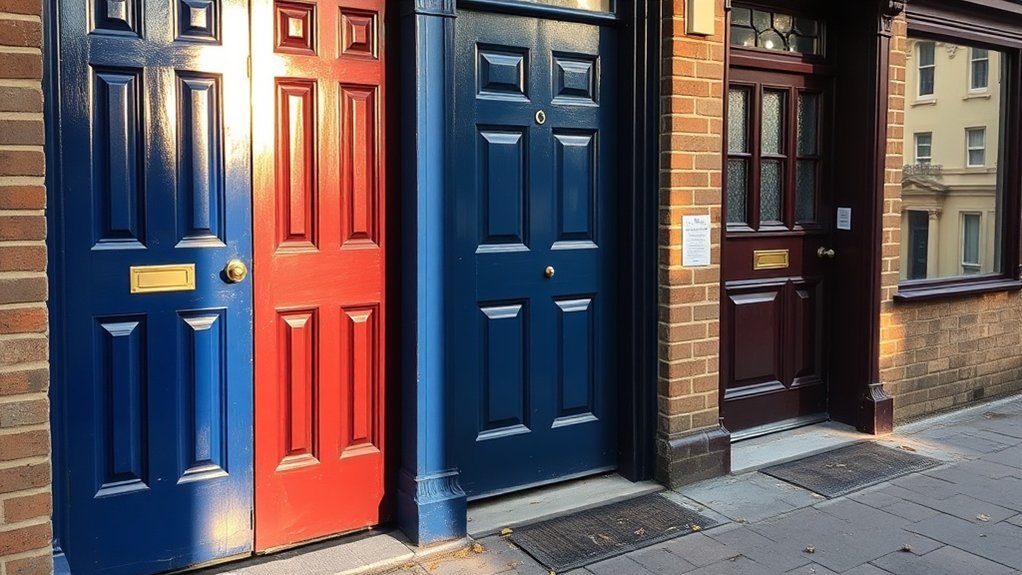
When you choose a shop front door in Richmond, you need high‑security locking , laminated glazing, thermally broken aluminium or engineered timber frames, and full compliance with planning, Part M accessibility and conservation rules. Specify robust hinges, heavy‑duty closers, low‑E double glazing and airtight seals to handle footfall, noise and heating costs. Decide early between off‑the‑shelf and bespoke to balance budget with branding and performance, because the right entrance can work as engineered street‑facing equipment.
Key insights
- Supply and installation of secure aluminium, steel, and timber shop front doors across Richmond, including laminated security glass and multi-point locking systems.
- Fully compliant with Richmond planning, conservation area guidelines, and UK Building Regulations, including fire safety and accessibility (Part M, Equality Act).
- Bespoke and off-the-shelf options to suit branding, from ultra-clear display glazing to frosted or branded glass, with a wide range of colours and finishes.
- Energy-efficient, thermally broken frames and acoustic glazing to reduce heat loss and street noise in busy Richmond locations.
- Ongoing maintenance, repairs, and upgrade services, including smart access control, closers, hinges, and hardware replacement for high-footfall premises.
Key Criteria For A Great Richmond, TW9 Shop Front Door
Although every premises has its own constraints, a great Richmond shop front door always meets the same core criteria: robust security, high footfall durability , compliance with UK building and fire regulations, effective thermal and acoustic performance, and strong visual alignment with your brand and the surrounding streetscape.
You start by engineering Retail security into the door leaf, frame, and ironmongery: anti-jemmy sections, multi-point locking, laminated security glass, and certified cylinders. Next, specify heavy-duty hinges, closers, and thresholds rated for intensive use, so operation stays smooth under constant traffic.
To enhance Customer engagement, you maximise clear glazing, sightlines, and intuitive pull/push geometry, then integrate accessibility, airtight seals, and low-U-value systems . Finally, you coordinate finishes, lighting spill, and handle design to communicate brand quality instantly.
Planning Rules And Conservation Areas In Richmond
Once you’ve defined the performance and security brief for your shop front door, you have to test those ambitions against Richmond’s planning framework, especially if your premises sit in a conservation area or within a designated shopping parade. You’re not just getting consent; you’re negotiating between innovation, urban aesthetics, and historical preservation.
You’ll typically need planning permission for material changes to openings, frames, glazing proportions, and signage integration. Check your borough’s conservation area appraisal and shopfront SPD before commissioning drawings.
- Map constraints: Article 4 Directions, frontage lines, sightlines
- Specify compliant materials: hardwoods, slimline aluminium, heritage ironmongery
- Quantify change: scaled elevations, sections, and joinery details
- De-risk approval: pre-application discussion with a conservation or design officer
Designing A Richmond Shop Front Door For Your Brand
When you design a Richmond, TW9 shop front door for your brand, you should treat it as a functional extension of your visual identity, not just an entry point. You’ll need to specify materials, colours, and hardware that express your brand’s positioning while still meeting performance requirements such as durability, security, and thermal efficiency. By carefully coordinating proportions, glazing style, and finish with your signage and storefront, you create a coherent streetscape presence that customers recognise instantly.
Aligning Door With Brand
Why should a shop front door in Richmond function as anything less than a three-dimensional expression of your brand? You align the door with your brand by translating your identity into interaction, not decoration. Treat the entrance as a calibrated interface for customer engagement and branding consistency, where every element is intentional and measurable.
Design your door to:
- Signal your market position through proportion, hardware sophistication, and detailing precision
- Guide visitor flow via door width, swing, and handle ergonomics that match your service model
- Integrate smart access (sensors, counters, signage triggers) to capture behavioural data
- Synchronise logo placement, typography, and lighting hierarchy with wider brand touchpoints
Materials, Colours And Style
Brand alignment sets the brief; materials, colours, and style execute it at street level. You’re engineering a high-performance interface between brand and passer-by, so specify materials first. In Richmond, aluminium and steel suit slim profiles and high-traffic resilience , while engineered timber or hybrid composites give warmth with predictable dimensional stability. Track material trends such as thermally broken frames, anti-fingerprint coatings, and smart glass for dynamic transparency.
Next, deploy colour psychology deliberately. Use high-chroma accents to signal energy and innovation, desaturated palettes for premium calm, and contrast ratios that maximise legibility in low light. Style completes the system: integrate flush thresholds, minimal ironmongery, and concealed closers so the door reads as one coherent, branded technology, not just a compliant entry point.
Best Materials For Richmond Shop Front Doors
When you choose materials for a Richmond shop front door, you need to balance security , maintenance, and planning constraints. Durable aluminium shopfronts give you high structural strength and corrosion resistance, while timber doors suit heritage facades and conservation area requirements. Toughened glass front options then let you maximise visibility and natural light without compromising on impact resistance or safety standards.
Durable Aluminium Shopfronts
How do you guarantee your Richmond, TW9 shop front can withstand constant footfall, pollution, and unpredictable weather without constant repairs? You specify a precision-engineered aluminium shopfront system. Aluminium profiles deliver high structural integrity with slim sightlines, enhancing retail branding while maximising glazing for better customer experience and product visibility.
- High-tensile alloy frames resist impact, forced entry, and door sagging.
- Polyester powder-coated finishes outperform standard paint against UV, grime, and corrosion .
- Thermal break technology reduces heat transfer, improving comfort and energy performance.
- Modular systems integrate auto-doors, sensors, and access control for future-ready upgrades.
You can calibrate door closers, pivot hardware, and thresholds to handle heavy pedestrian flow, prams, and deliveries. With minimal maintenance and long lifecycle value, aluminium becomes a strategic, innovation-led choice.
Timber Doors For Heritage
Nowhere does material choice matter more than in Richmond’s conservation areas , where a timber shop front door often becomes a planning requirement rather than a design preference. You’re not just fitting an entrance; you’re aligning with heritage restoration standards, local character, and long-term performance.
You should specify engineered hardwoods (often Accoya or oak) for superior stability, minimal warping, and tight tolerances around weatherstripping and thresholds. High-performance microporous coatings let the timber breathe while resisting moisture ingress and UV degradation. Precision timber craftsmanship allows you to replicate original mouldings, panel pa